【Abstract】
The price of spunlace nonwoven fabric is primarily influenced by fiber composition, basis weight (GSM), texture structure, web width utilization, and production efficiency.
If two spunlace fabrics appear visually similar yet have significantly different quotes, the disparity typically lies not in their “surface” but in raw material ratios, machinery configuration, and production optimization capabilities. Understanding these cost drivers helps accurately assess the price per kilogram of spunlace nonwoven fabric and avoid unnecessary expenditures.
1. Raw Material Composition: The Primary Cost Factor
Raw materials typically account for over 70% of the total cost of spunlace nonwoven fabric.
Viscose: Offers excellent absorbency and soft handfeel, but higher costs due to wood pulp sourcing and complex processing.
Polyester: Provides strength and cost stability; large-scale production reduces unit price.
Wood pulp and PP: Commonly used for industrial wiping or specialized applications, offering a competitive cost structure.
2. Grammage (GSM): Weight Directly Impacts Price
Grammage determines fiber consumption and energy expenditure.
40–70gsm: Highest production efficiency and best cost-performance ratio
Below 35gsm: Production requires slower speeds, potentially increasing processing costs per ton
Above 100gsm: Significant increases in raw material and drying energy consumption
Higher grammage naturally increases the price per ton of spunlace fabric.
3. Texture Structure and Production Speed
Texture design impacts production efficiency and mold wear.
Plain weave: Lowest cost, highest efficiency
Mesh: Enhanced functionality but increased mold wear
Embossed/pearl weave: Superior texture but reduced production speed and slightly higher price
More complex patterns typically incur higher manufacturing costs.
4. Web Width Utilization and Edge Waste
Spunlace production lines typically operate at fixed widths (e.g., 3.2 meters).
If slitting specifications fail to fully utilize the full width, scrap loss increases, and this cost is reflected in the final unit price.
5. Why Choose SoonerCleaning Spunlace Manufacturing Solution?
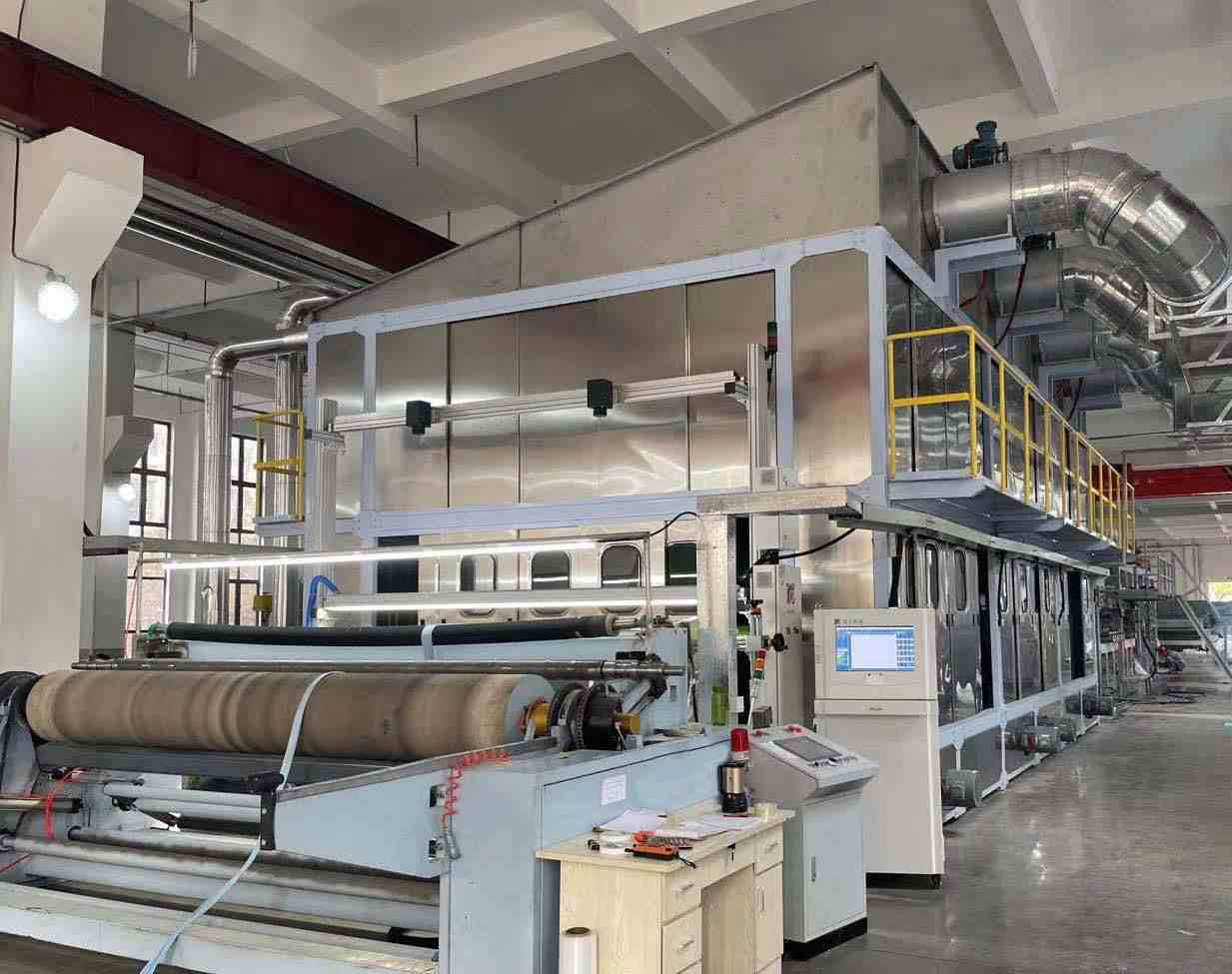
3.2m production line
flexible fiber blending
OEM customization
strict quality control
cost optimization experience
We tailor specifications—from basis weight and texture to roll length and core dimensions—to client needs, eliminating over-engineering costs.
6. FAQ About Spunlace Fabric Price
Q1:What is the approximate price per kilogram for spunlace nonwoven fabric?
Pricing depends on fiber blend, basis weight, texture type, and order volume.
Q2:Why is viscose spunlace more expensive than polyester?
Viscose involves complex processing and higher raw material costs; higher viscose content increases price.
Q3:Does basis weight significantly impact price?
Higher basis weight increases fiber consumption and energy use, raising cost per ton.
Lower-grammage fabrics may also incur higher per-ton costs due to slower production speeds.
Q4:How can procurement costs be reduced?
Adjust fiber composition
Select standard grammages
Optimize slitting widths to minimize scrap
Avoid unnecessarily complex patterns
Q5:Are colored spunlace fabrics more expensive?
Yes. Color changes require machine cleaning and downtime, while pigment costs increase. Higher minimum order quantities (MOQs) are typically required.
7.Obtain a Customized Cost Assessment
Spunlace nonwoven pricing is highly dependent on specifications. Rather than blindly comparing prices, conduct a structured assessment based on fiber composition, basis weight, weave pattern, and width planning to obtain more accurate and competitive pricing solutions.