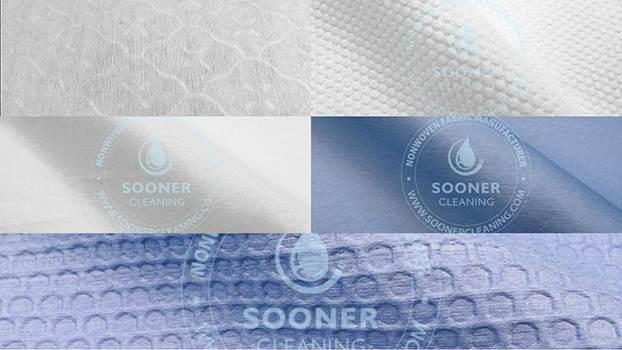
When developing wipes, medical products, and industrial cleaning materials, selecting the right spunlace nonwoven fabric is an important decision for manufacturers.
Although the spunlace process determines the basic structure and performance of nonwoven materials, fiber composition directly affects key properties such as softness, absorbency, wet strength, durability, and cost efficiency.
For global buyers, understanding how different fibers influence the performance of spunlace nonwoven fabric helps them select the most suitable material solution for their specific applications.
Spunlace nonwoven fabric is produced by using high-pressure water jets to entangle fibers and create a stable web structure.
Unlike traditional textile materials, the performance of spunlace nonwoven fabric highly depends on the characteristics of the fibers used.
Different fibers provide different advantages:
-
Natural fibers generally offer better softness and liquid absorption.
-
Synthetic fibers usually provide higher strength and durability.
-
Blended fibers combine the advantages of multiple materials to achieve a better performance balance.
Therefore, professional spunlace nonwoven manufacturers do not rely on a single fixed formula. Instead, they customize fiber compositions based on the requirements of different end applications.
How Different Fibers Affect Spunlace Nonwoven Performance
1. Viscose Fiber: Excellent Softness and Absorbency
Due to its excellent hydrophilicity and soft touch, viscose fiber provides:
-
High liquid absorption capacity;
-
Soft and comfortable surface feeling;
-
Good liquid retention performance;
-
Better skin-contact comfort.
Viscose spunlace materials are widely used in:
-
Facial masks and beauty wipes;
-
Baby wipes;
-
Personal care wipes.
For applications that prioritize softness and absorbency, viscose-based spunlace nonwoven fabric is usually the preferred choice.
2. Polyester Fiber (PET): Improved Strength and Durability
Polyester fiber is a synthetic fiber known for its excellent mechanical strength.
Compared with viscose fiber, PET provides:
-
Higher tensile strength;
-
Better abrasion resistance;
-
Improved dimensional stability;
-
Stronger durability during use.
However, polyester fiber has lower absorbency compared with natural fibers. Therefore, it is often blended with viscose or wood pulp fibers to achieve a better balance between strength and absorption.
3. Wood Pulp Fiber: Enhanced Liquid Absorption Efficiency
Wood pulp is a natural cellulose fiber that is widely used in disposable cleaning materials.
Its main advantages include:
-
Excellent liquid absorption capability;
-
Lightweight structure;
-
Cost efficiency;
-
Good cleaning performance.
Wood pulp composite spunlace materials are commonly used for:
-
Industrial cleaning wipes;
-
Kitchen cleaning wipes;
-
General cleaning products.
By combining wood pulp with synthetic fibers, manufacturers can improve both liquid absorption and fabric strength.
Why Are Blended Fibers Commonly Used in Spunlace Materials?
In practical applications, a single fiber type often cannot meet all performance requirements.
For example:
70% Viscose / 30% Polyester Spunlace Nonwoven Fabric
Viscose provides:
-
Softness;
-
Improved absorbency.
Polyester provides:
-
Higher wet strength;
-
Enhanced durability.
This combination creates a balanced material solution suitable for various wiping applications.
Wood Pulp + Polyester Spunlace Material
Wood pulp provides:
-
High liquid absorption performance.
Polyester provides:
-
Structural stability and strength.
This combination is widely used in precision industrial cleaning wipes and medical wiping products.
How Do Manufacturers Select the Right Fiber Ratio?
Professional suppliers usually consider several factors when recommending fiber compositions.
1. Final Product Application
Different products require different material properties.
Application
|
Main Requirements
|
Recommended Fiber
|
Baby wipes
|
Softness and absorbency
|
Viscose
|
Kitchen cleaning wipes
|
Cleanliness and liquid absorption
|
Viscose/PET
|
Industrial wipes
|
Strength and durability
|
PET blended materials
|
2. Type of Liquid Solution Used
Different formulations, such as cleaning solutions, disinfectants, and oil-based liquids, can influence material selection.
Different fiber structures provide different levels of liquid absorption and retention performance.
3. Converting and Production Requirements
Roll width, GSM, downstream converting equipment, and packaging requirements can also affect the final material selection.
A professional spunlace nonwoven supplier can optimize fiber composition according to customers’ product development needs.
Soonercleaning Provides Customized Spunlace Nonwoven Solutions
Based on different application requirements, Soonercleaning provides various fiber composition solutions, including:
|Viscose polyester spunlace nonwoven fabric;
With more than 17 years of advanced manufacturing experience and professional technical support, Soonercleaning works with global customers to develop high-performance nonwoven materials for applications including:
|Wet wipes;
|Personal care products;
|Household cleaning products;
|Medical applications;
|Industrial cleaning solutions.
Conclusion
Fiber composition plays a critical role in determining the final performance of spunlace nonwoven fabric.
By selecting the right combination of viscose, polyester, wood pulp, and other fibers, manufacturers can achieve an ideal balance between softness, absorbency, strength, durability, and cost efficiency.
For product developers and converters, working with an experienced spunlace nonwoven manufacturer can help optimize material performance and create more competitive products.